Embracing Spring Learning: A Guide to Printable I Spy Coloring Activities and Digital Worksheets
As the seasons shift and the world begins to bloom, educators, parents, and caregivers naturally seek activities that mirror this renewal. Spring is not only a time for outdoor exploration but also a prime opportunity for indoor educational engagement that captures the vibrancy of the season. Among the most effective tools for this transitional period are Spring printable coloring activity pages combined with interactive cognitive exercises like the I Spy game. These resources bridge the gap between creative expression and early childhood development, offering a multifaceted approach to learning that is both accessible and highly effective.
In the modern digital landscape, the availability of high-quality, instant-download educational materials has transformed how we approach seasonal learning. Understanding the value, technical specifications, and practical application of these digital assets is essential for anyone looking to enrich a child’s spring curriculum. This guide explores the significance of black-and-white searching and counting worksheets, the benefits of vector-based printables, and how to maximize these tools in daily educational routines.
The Educational Power of "I Spy" and Coloring Integration
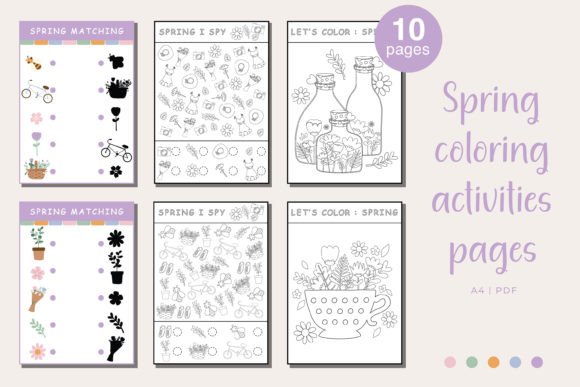
At first glance, a black-and-white worksheet featuring spring elements may seem like simple entertainment. However, when designed as a searching and counting activity with drawing symbols, it becomes a robust developmental tool. The combination of visual discrimination tasks with fine motor practice addresses several key areas of early childhood growth simultaneously.
Cognitive Development and Visual Discrimination
The core mechanic of an I Spy game requires a child to scan a complex field of images to identify specific targets. This process strengthens visual discrimination, which is the ability to notice subtle differences and similarities between objects. This skill is foundational for future literacy; before a child can distinguish between the letters "b" and "d," they must be able to differentiate between similar shapes and symbols in a playful context. By searching for specific spring icons—such as tulips, butterflies, or rain boots—children train their brains to categorize and recognize patterns, a critical precursor to reading and mathematics.
Fine Motor Skills Through Symbol Drawing
Unlike standard coloring pages where the goal is simply to fill space, activity pages that require drawing symbols add a layer of intentionality. When a child finds a hidden object and must draw a checkmark, a star, or tally mark next to it, they are practicing hand-eye coordination and pencil control. This dual-action task reinforces the connection between seeing and doing. For younger learners, this serves as pre-writing practice, building the muscle memory necessary for forming letters and numbers later on. The black-and-white format further enhances this by removing the distraction of pre-applied color, allowing the child to focus entirely on line recognition and spatial awareness.
Understanding Digital File Formats for Optimal Printing
When purchasing digital educational resources, understanding the technical specifications is just as important as understanding the pedagogical value. High-quality spring printable packages typically include specific file types designed for different uses. Knowing the difference ensures you get the best possible result from your home or office printer.
- .EPS Vector Files: These are the gold standard for graphic design and printing. Vector files use mathematical equations rather than pixels to create images. This means they are infinitely scalable without losing quality. If you wish to resize a spring coloring page to fit a larger poster board or shrink it for a travel-sized activity book, the .EPS file ensures crisp, clean lines at any dimension. While specialized software is often needed to edit these, they serve as the master source for perfect prints.
- .PDF Files (A4 Size): For most parents and teachers, the PDF is the workhorse format. Optimized for A4 paper, these files preserve the layout and formatting exactly as the designer intended. They are universally compatible with free readers and are designed for immediate printing. The fixed size ensures that margins remain consistent, preventing important elements of the I Spy game from being cut off during the printing process.
- .JPEG Files (300 DPI): Resolution matters significantly when printing line art. A specification of 300 DPI (dots per inch) indicates professional print quality. Lower resolution images (like those found on standard websites) often appear pixelated or blurry when printed on paper. High-DPI JPEGs ensure that the intricate details of spring elements remain sharp, making the searching activity easier and more enjoyable for children. These files are also useful for importing into other documents or digital whiteboards.
Clarifying the Digital Purchase Experience
A common point of confusion for new buyers of educational printables is the nature of the transaction. It is vital to emphasize that these are DIGITAL files purchased, and no physical item will be shipped. This distinction offers significant advantages but also requires a shift in expectation.
The primary benefit of digital delivery is immediacy. Once payment is confirmed, the files are available for instant download. This eliminates shipping times and costs, making it possible to prepare a lesson plan or rainy-day activity within minutes. Furthermore, digital ownership allows for unlimited reprints. If a child makes a mistake on their counting worksheet or simply loves the activity enough to want to do it again, you can print a fresh copy without repurchasing. This sustainability aspect reduces waste compared to buying single-use physical workbooks.
However, users should be aware that color may vary from screen display depending on your mode of printing. Monitors emit light using RGB color profiles, while printers use CMYK ink or toner. Even with black-and-white line art, the contrast and darkness of the lines can differ based on printer settings, paper type, and ink levels. We recommend performing a test print on standard paper before using specialty cardstock or photo paper to ensure the output meets your expectations.
Practical Applications in Modern Education and Home Life
Spring printable worksheets are versatile tools that fit seamlessly into various environments. Their utility extends far beyond a simple table activity.
Classroom Centers and Morning Work
For educators, these black-and-white searching pages are ideal for independent learning centers. Because they are self-explanatory and engaging, students can complete them autonomously while the teacher works with small groups. The counting aspect allows for easy integration into math lessons, where children can graph the number of items found or practice addition by combining totals from different categories.
Homeschooling and Seasonal Units
Homeschool families often build curriculum around seasonal themes. A set of spring I Spy pages complements nature studies perfectly. After observing real flowers or insects outside, children can reinforce their vocabulary indoors through these worksheets. The drawing symbol component allows for open-ended creativity; older children might write the name of the object instead of drawing a symbol, adapting the resource to different age groups within the same household.
Travel and Quiet Time
Digital files offer portability. Parents can load JPEG versions onto tablets for screen-time that still encourages observation skills, or print a batch of PDFs for a travel binder. In an era where passive consumption dominates, having active, low-tech engagement options is crucial for balancing a child's daily routine.
Tips for Maximizing Your Spring Activity Pages
To get the most out of your purchase, consider these practical strategies:
- Laminate for Reusability: If using dry-erase markers, laminate the PDF pages or place them in sheet protectors. This turns a single-use worksheet into a durable game that can be played repeatedly throughout the spring season.
- Adjust Printer Settings: Always select "Fit to Page" or "Actual Size" in your print dialog box to maintain proper proportions. Ensure your printer is set to "High Quality" or "Best" mode to achieve the sharpest lines for the 300 DPI files.
- Create a Scavenger Hunt: Use the printable as a checklist for a real-world scavenger hunt. Children can find the items on the page in their backyard or local park, connecting the abstract worksheet to tangible reality.
- Encourage Discussion: Ask open-ended questions about the images. "Why do you think the butterfly is hiding behind the flower?" or "What else might we see in spring that isn't on this page?" This extends the activity from visual processing to language development.
Support and Troubleshooting
While digital products are designed for ease of use, technical hiccups can occasionally occur. Whether you have trouble downloading the files after payment confirmation, need advice on which file format suits your specific project, or encounter printing issues, support is a key part of the digital marketplace experience.
Please feel free to contact me if you have any problems or questions regarding the file usage. Open communication ensures that every customer can fully utilize their purchase. Whether you are a seasoned educator familiar with vector graphics or a parent printing your first homeschool worksheet, assistance is available to help you navigate the technical aspects so you can focus on what matters most: facilitating joyful, meaningful learning experiences for children.
Thank you for your support. By choosing high-quality, thoughtfully designed digital resources, you are investing in tools that celebrate the season while nurturing essential developmental skills. Spring is a time of growth, and with the right activities, that growth extends beautifully into the minds and imaginations of young learners.