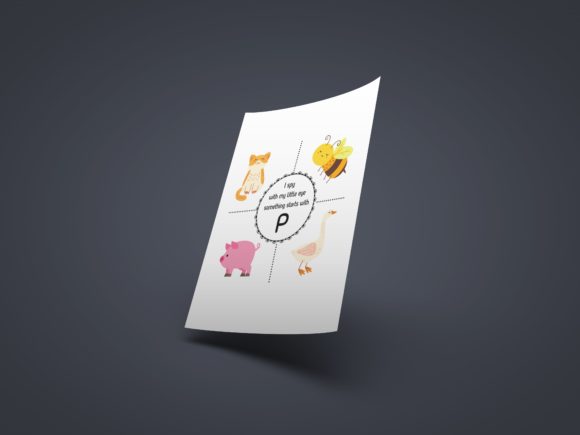
I Spy Animals Letter P: A Fun and Educational Guide to "P is for Pig"
Early childhood education thrives on engagement, repetition, and play. Among the most enduring and effective tools in a parent or educator’s arsenal is the classic guessing game known as "I Spy." When tailored to specific phonics lessons, such as I Spy Animals for Kids - Letter P, this simple activity transforms into a powerful learning experience. Focusing on the theme "P is for Pig" provides a concrete anchor for toddlers and preschoolers as they navigate the complexities of early literacy. This guide explores how to maximize the educational value of these printable resources, ensuring that fun and foundational learning go hand in hand.
Understanding the "I Spy" Concept for Early Learners
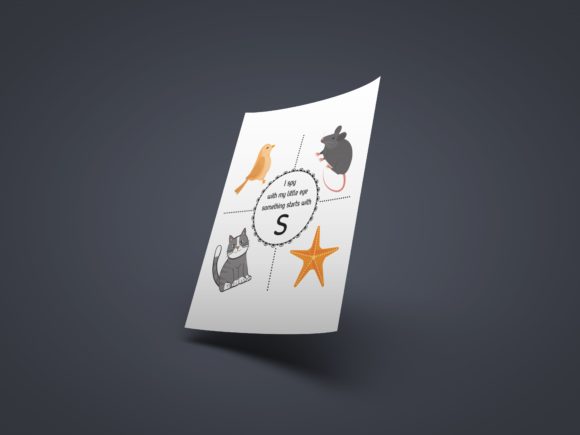
At its core, I Spy is a guessing game where participants must identify an object based on a verbal clue. The traditional phrase, "I spy with my little eye, something beginning with...", serves as a rhythmic cue that signals the start of a cognitive challenge. For young children, this structure provides predictability and safety within the learning environment. They know exactly what is expected of them: listen to the sound, scan the visual field, and make a connection between auditory input and visual representation.
When utilizing I Spy Animals Letter P worksheets or digital PNGs, the abstract concept of the letter "P" becomes tangible. Instead of merely memorizing a symbol, the child associates the shape and sound of the letter with recognizable creatures like pigs, penguins, parrots, and pandas. This multisensory approach reinforces neural pathways associated with phonemic awareness, which is the ability to hear, identify, and manipulate individual sounds in spoken words.
Why Focus on the Letter P?
The letter P is particularly significant in early phonics instruction because it is a plosive consonant. This means it is produced by stopping the airflow and then releasing it in a burst. This distinct physical sensation makes it easier for toddlers to feel and recognize compared to softer sounds like "M" or "N." Furthermore, the animal kingdom offers a rich vocabulary for this letter, making P is for Pig activities naturally diverse and engaging.
- Visual Distinctiveness: Animals starting with P often have unique silhouettes (e.g., the beak of a pelican vs. the stripes of a pangolin), aiding visual discrimination skills.
- Vocabulary Expansion: Beyond common farm animals, the letter P introduces exotic wildlife, broadening a child's general knowledge base.
- Articulation Practice: Repeating "P-P-Pig" helps strengthen oral motor muscles necessary for clear speech development.
Maximizing Educational Value with Printable Resources
Many parents and teachers seek high-quality visuals to support these lessons. When you acquire resources labeled as 2 PNG I Spy files, you are typically receiving transparent-background images that can be layered over various backgrounds or inserted into custom worksheets without unsightly white boxes. Understanding how to use these assets effectively can elevate a simple game into a comprehensive lesson plan.
From Digital to Tactile Learning
While digital interaction has its place, research consistently shows that tactile experiences solidify learning for toddlers. Printing your I Spy Animals for Kids - Letter P materials allows children to physically point, trace, and manipulate the learning aids. Consider laminating the printed PNGs to create reusable activity cards. This not only preserves the resource but also allows for the use of dry-erase markers, enabling children to circle the pig or cross out non-P animals repeatedly.
The inclusion of two distinct PNG variations suggests an opportunity for differentiation. One image might feature realistic photography for children who benefit from concrete representations, while the other might offer stylized clip art for those who respond better to simplified shapes. Alternatively, one could be a cluttered scene for advanced learners and the other a sparse layout for beginners. Leveraging both versions ensures that the activity remains accessible yet challenging across different developmental stages.
Step-by-Step Guide to Playing "P is for Pig"
To ensure TON of fun is Guaranteed for Kids Toddlers, structure the game to balance success with challenge. Frustration can halt learning, so scaffolding the activity is essential. Here is a recommended flow for conducting an I Spy session focused on the letter P:
- Prime the Brain: Before showing the picture, say the sound /p/ several times. Ask the child to mimic the sound. Introduce the target word: "Today we are looking for things that start with /p/, like Pig!"
- Model the Process: Point to a pig in the image and say, "I spy with my little eye, something beginning with P. It says oink! Is it this pig?" This demonstrates the connection between the clue and the visual.
- Guided Search: Ask the child to find another P animal. If they struggle, provide secondary clues related to color, size, or habitat rather than giving the answer immediately.
- Verification: When the child identifies an item, ask them to name it and emphasize the initial sound. "Yes! That is a Penguin. /p/-/p/-Penguin."
- Extension: Once all P animals are found, discuss the non-P animals briefly to reinforce categorization. "This is a cow. Does cow start with /p/? No, it starts with /c/."
Cognitive Benefits Beyond Alphabet Recognition
While the primary goal of I Spy Animals Letter P is literacy, the secondary benefits are equally valuable in modern early childhood development. In an era where attention spans are increasingly fragmented, I Spy demands sustained focus. Children must inhibit the impulse to point at random objects and instead apply a specific filter to their visual processing. This executive function skill, known as selective attention, is critical for future academic success in reading and mathematics.
Additionally, these games foster emotional resilience. Searching through a busy illustration requires patience. When a child finally locates the hidden platypus among the foliage, the dopamine release associated with problem-solving creates a positive feedback loop with learning. They learn that effort leads to discovery, a mindset that translates directly to classroom readiness and lifelong curiosity.
Integrating Technology Thoughtfully
In today’s digital landscape, using PNG files on tablets or interactive whiteboards can add a layer of novelty. However, it is vital to maintain the social aspect of the game. Technology should facilitate interaction, not replace it. If using a screen, sit beside the child rather than handing over the device. Use the digital format to zoom in on details or animate the reveal of the correct answer, but keep the dialogue human-centered. The phrase "I spy with my little eye" is inherently relational; preserving that connection ensures the activity remains emotionally supportive as well as educationally rigorous.
Common Misunderstandings and Best Practices
A frequent misconception is that I Spy is merely a time-filler or a passive entertainment activity. To avoid this, educators must approach it with intentionality. Another common pitfall is focusing solely on the letter name ("Pee") rather than the letter sound (/p/). For early readers, phonemic awareness precedes alphabet naming. Always prioritize the sound the letter makes in the context of the word "Pig" over the abstract name of the character.
Furthermore, do not underestimate the importance of context. Isolating the letter P on a flashcard is useful, but embedding it within the thematic framework of animals provides semantic hooks that aid memory retention. When a child understands that P represents a category of living things they find interesting, the letter ceases to be an arbitrary symbol and becomes a key to unlocking knowledge about the world around them.
Conclusion: Building Foundations Through Play
The combination of I Spy Animals for Kids - Letter P and the specific focus on P is for Pig represents a gold standard in playful pedagogy. By utilizing high-quality resources like dedicated PNG graphics and adhering to structured yet flexible gameplay, adults can transform a simple guessing game into a robust literacy intervention. Whether printed for tactile exploration or displayed digitally for group engagement, these activities honor the way young children learn best: through curiosity, connection, and joy. Remember, when you check the pictures and try to find the solution together, you are doing far more than identifying livestock; you are building the cognitive architecture necessary for a lifetime of learning.